
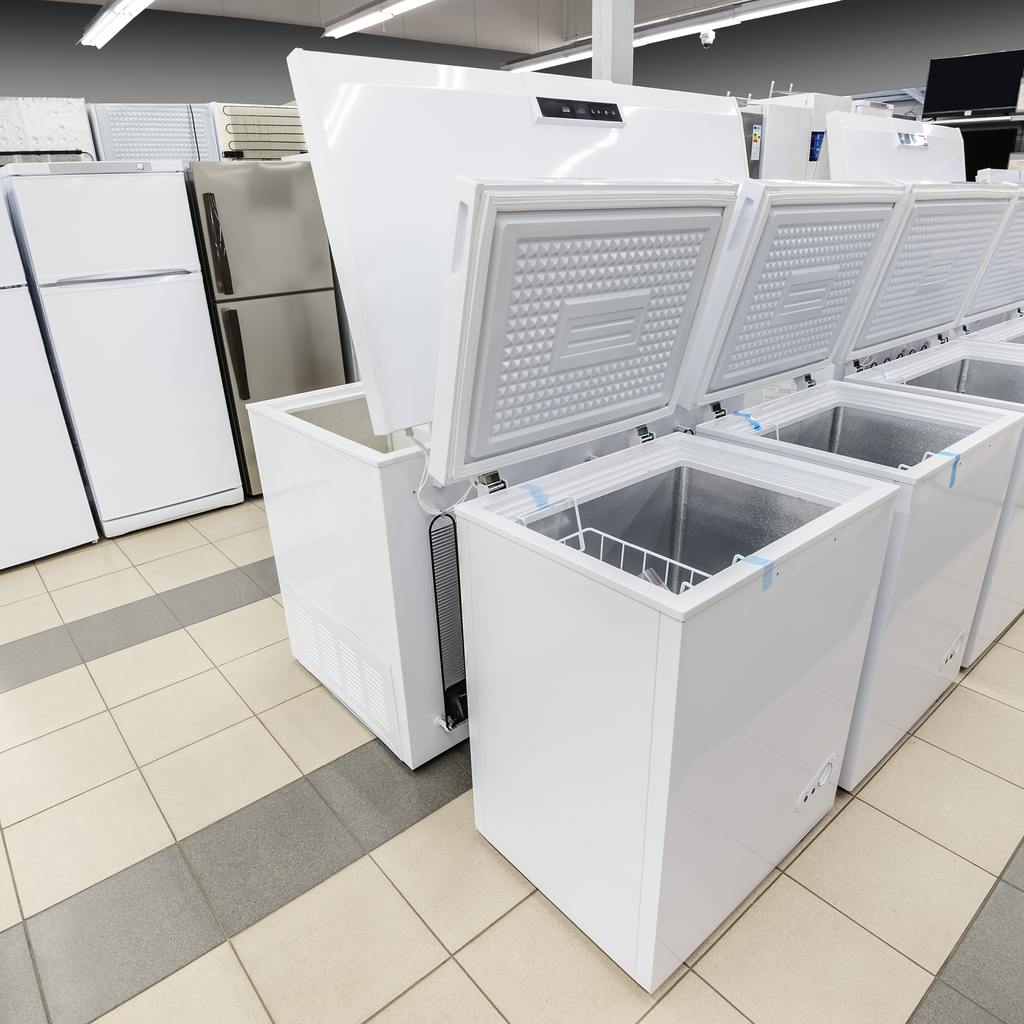
Summer is peak season for freezers. We stock up on popsicles, freeze the season’s berries, and lean on the garage chest freezer for bulk meat and long-weekend cookouts. So when your freezer isn’t freezing in the middle of July, it’s more than an inconvenience — it’s a fast-melting pile of expensive food.
The good news: many summer freezer problems come from the heat itself and are easy to prevent. Here’s what causes a freezer to warm up in summer, what you can check yourself, and when it’s time to bring in a technician.
Why freezers struggle in the summer heat
Like your fridge, a freezer works by pulling heat out of the cabinet and releasing it into the room. The hotter the surrounding air, the harder it has to work to reach −18°C. That’s why so many freezer failures show up during a heat wave — the appliance is already running at its limit, and any weak component tips it over the edge. It’s also why the garage and basement, where many second freezers live, are the toughest spots for them in summer.
Common reasons a freezer won’t freeze in summer
- The garage is simply too hot. Most chest and upright freezers are only rated to run in ambient temperatures up to about 32–38°C. A closed garage on a 30°C day can easily blow past that. When it does, the freezer can’t cycle correctly and the contents start to soften. If you rely on a garage freezer, look for a “garage-ready” model built for temperature extremes.
- Dirty condenser coils. Dust-caked coils can’t release heat, and in a hot room that’s often the difference between −18°C and slush. Cleaning them is the single most effective summer maintenance step.
- A worn or dirty door gasket. Warm, humid summer air is constantly trying to get in. A cracked or sticky seal lets it, forcing the freezer to run non-stop while frost builds up around the leak.
- Frost buildup and a failing defrost system. A thick layer of frost on the walls or coils blocks airflow and insulates the very surfaces that are supposed to get cold. If frost keeps returning, the automatic defrost heater, timer, or sensor may have failed.
- Overloading during berry and BBQ season. Cramming a warm freezer full of just-picked produce or a bulk meat order forces it to remove a huge amount of heat at once — sometimes more than it can handle in a hot room. Freeze large batches in stages and leave room for air to circulate.
- A failing fan or compressor. A worn evaporator fan (often noisy) stops cold air from circulating, and a failing compressor or start relay stops the cooling entirely. These call for professional diagnosis.
Checks you can safely do yourself
- Confirm the temperature. A proper freezer sits at −18°C. Use a simple appliance thermometer — the built-in dial can be misread or knocked.
- Clean the coils and give it space. Unplug, vacuum the condenser coils, and make sure the unit has clearance to vent, especially if it’s tucked into a garage corner.
- Test the door seal. Close the door on a slip of paper; if it slides out with no resistance, the gasket needs cleaning or replacing.
- Don’t overfill — but don’t run it empty either. A freezer that’s about three-quarters full holds temperature best. If it’s sparse, a few jugs of water help it stay cold and ride out short power outages.
- Manually defrost if frost is thick. If ice has built up more than about half a centimetre, empty the freezer and let it defrost fully before restarting. Recurring frost, though, is a repair.
Protecting your food during a summer power outage
Ontario’s summer thunderstorms bring outages, and a full freezer is a real asset — a well-packed unit can hold safe temperatures for roughly 48 hours if you keep the door shut. Keep it closed, don’t peek, and check food with a thermometer afterward: anything still at or below 4°C with ice crystals is generally safe to refreeze. If the freezer never fully recovers after the power returns, that’s a sign a component was already marginal and gave out — worth having looked at.
When to call a technician
Reach out to a pro if, after the checks above, you still see the freezer struggling.
Call a technician if you notice:
- Food softening or partially thawing at the correct setting
- Frost that returns quickly after a full defrost
- Constant running with the cabinet still warm
- Loud buzzing, clicking, or a silent unit that won’t start
- An error code on newer LG, Samsung, or Whirlpool models
Our TSSA-certified technicians repair standalone freezers, fridge-freezers, and the sealed cooling systems inside them across every major brand. Freezer trouble is closely related to refrigerator repair, so if both your fridge and freezer are warming up, mention it when you book — it often points to a single shared cause.
Save your frozen stockpile — book same-day service
A failing freezer in summer can’t wait. Appfix offers same-day emergency appliance repair for families in Innisfil, Newmarket, and right across Central Ontario and the GTA — see all areas we serve.
Freezer going soft?
Book same-day freezer repair before your food thaws
- ★ 5.0 · 223 Google reviews
- TSSA-certified technicians
- $35 off your first repair
- No fix — no fee